
Public beta on TestFlight · iOS 26.2+
Finely
Know what your month is really costing you.
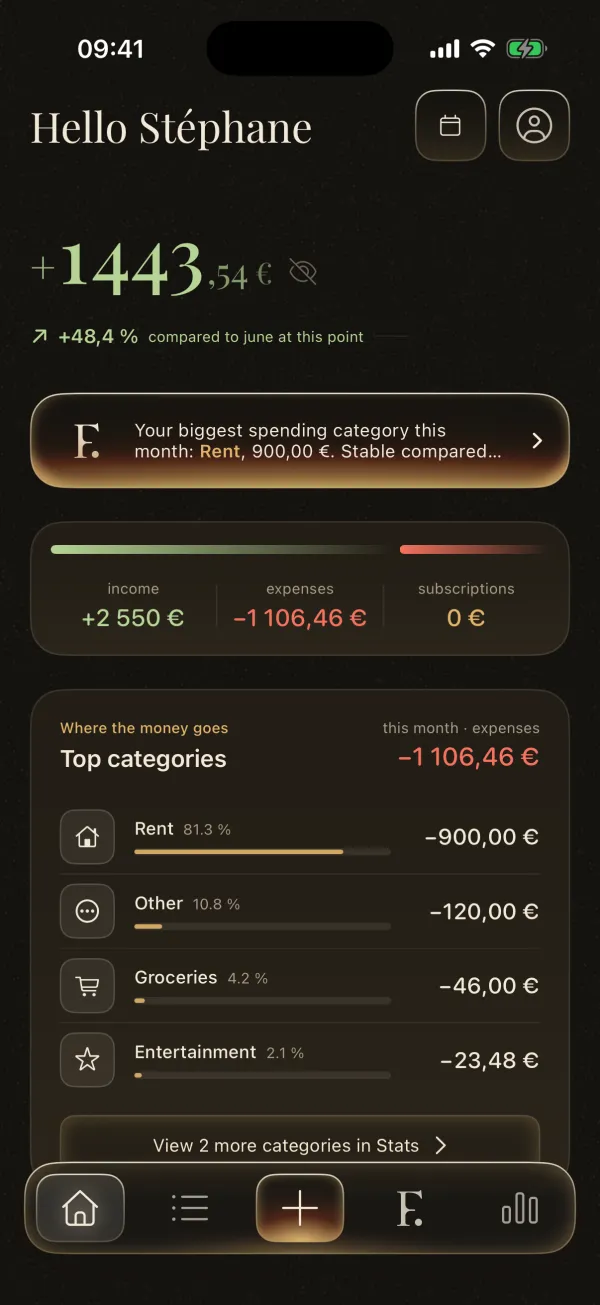
Inside Finely
-
Home Balance, available-to-spend context, upcoming commitments, and one useful signal for the month. -
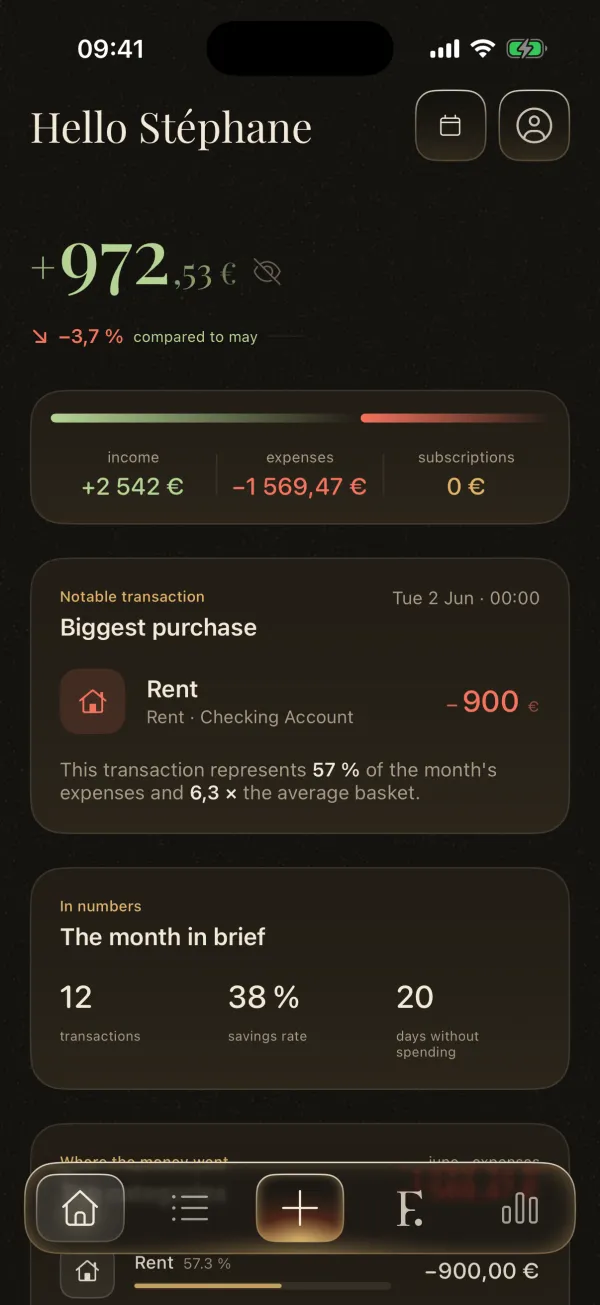
Month Review A reusable review turns recorded activity into income, spending, savings, and category context. -
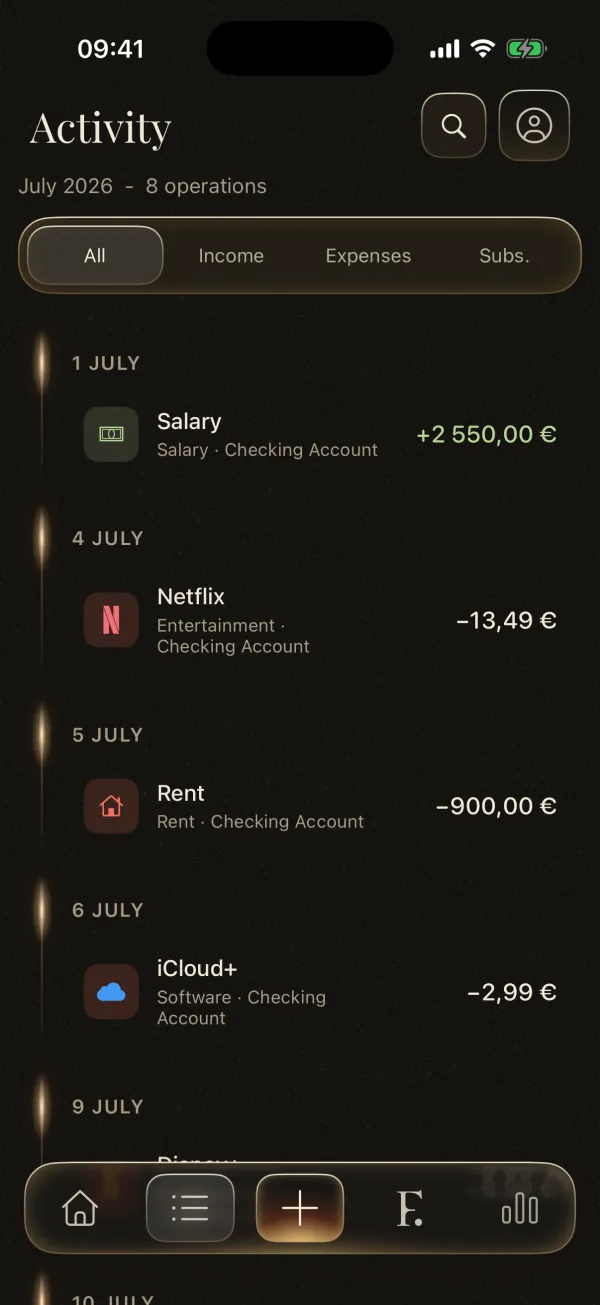
Activity Recorded transactions and due commitments share one chronological surface with full-history search. -
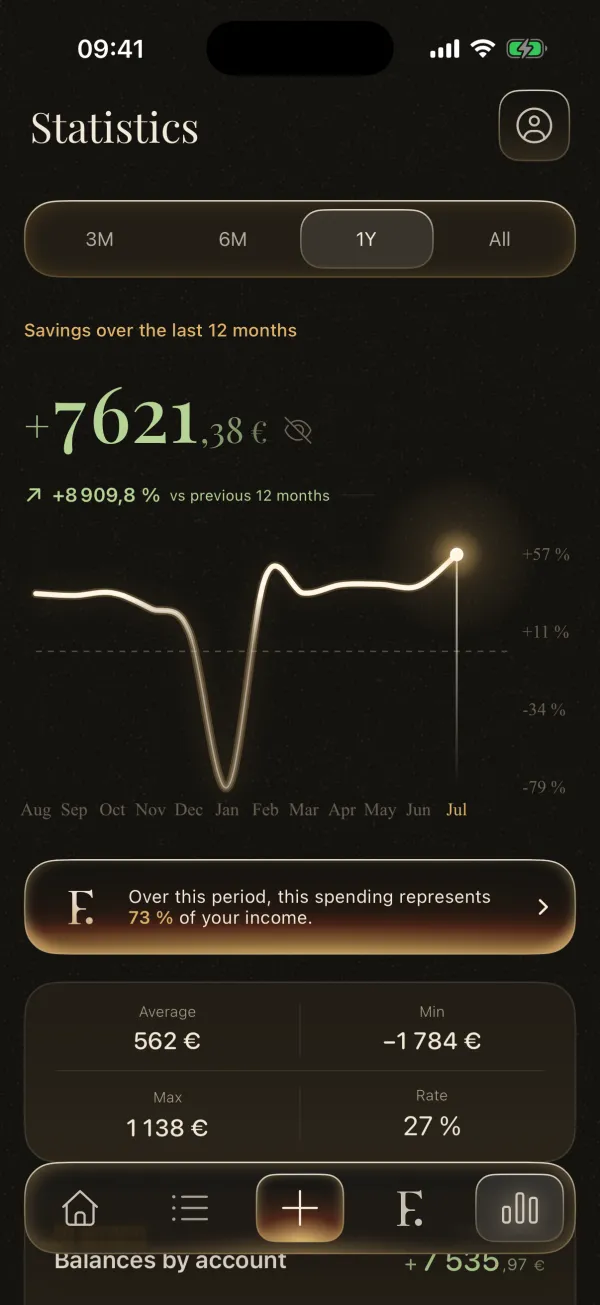
Statistics Categories, merchants, savings, and period comparisons expose patterns without changing the underlying facts. -
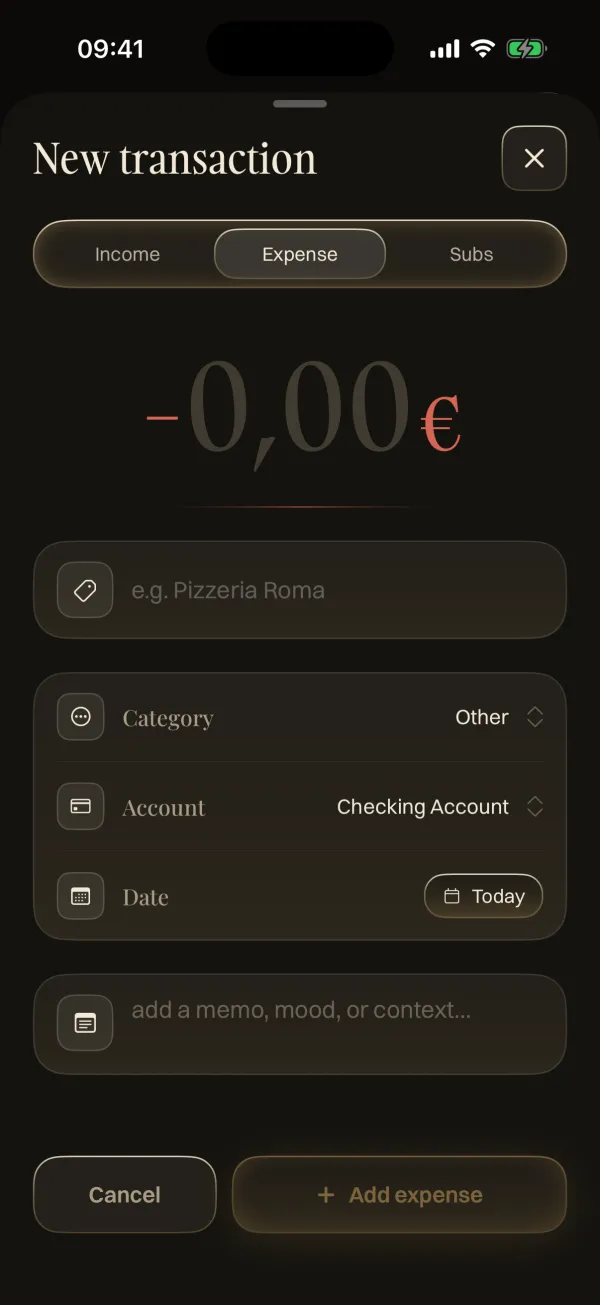
Transaction One-off and recurring movements enter through an editable native form with explicit financial meaning. -
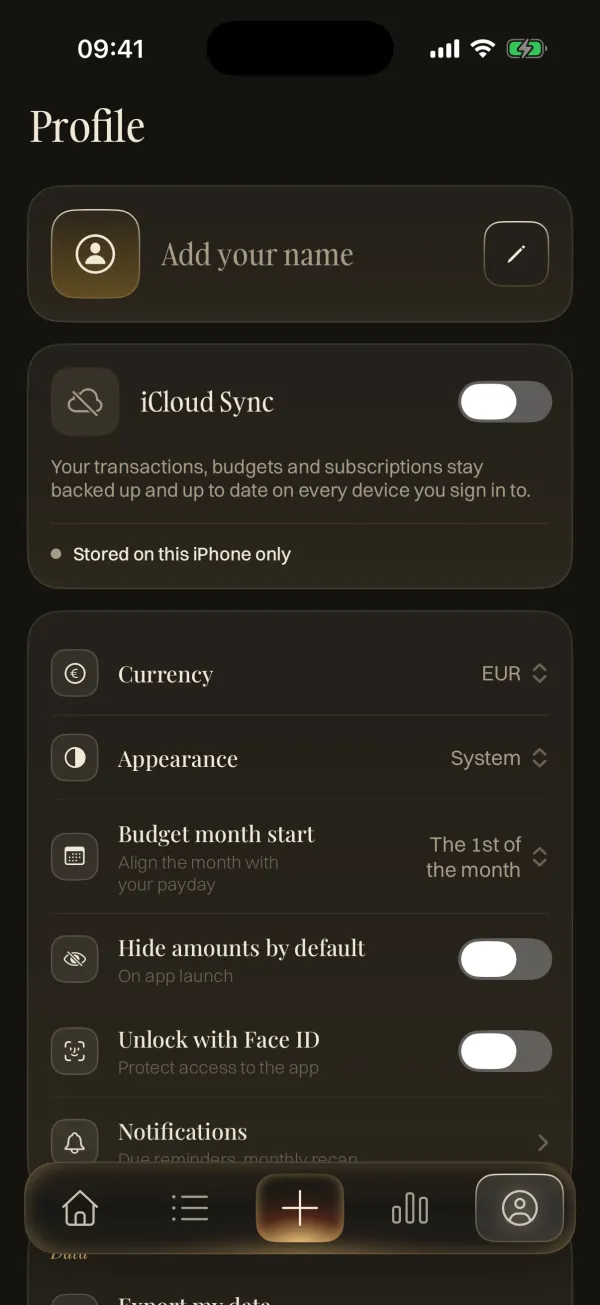
Profile Accounts, privacy controls, export, appearance, entitlement, and sync status stay visible. -
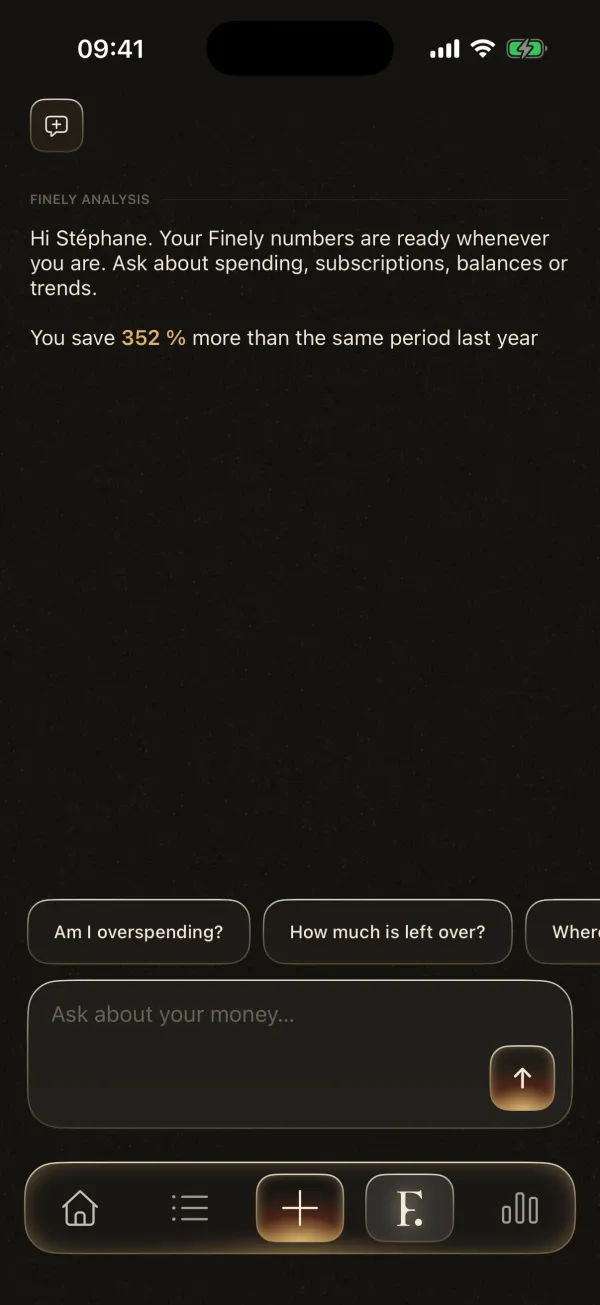
Analysis A question in plain language is routed to app-owned calculations that produce the answer.
A balance explains today. A period explains the decision.
Personal finance becomes useful when past activity and future commitments stop competing for attention. Finely keeps both visible and works out what they leave you for the current period, without asking you to reconcile raw accounting data.

From input to understanding
Each screen answers a different question, but none keeps its own version of the ledger. One path runs from capture to an explainable decision.

One source of truth, several ways to read it
Screens never merge stored and scheduled money on their own. Every change goes through one write path into SwiftData, and one read projection builds the picture every screen shares.

How a transaction is written once and read back everywhere is the subject of The Ledger Behind Finely.
Forecast the future, never rewrite the past
A recurring charge is useful before it happens, but it only becomes history when it is due. Finely keeps projection and persistence apart, so planning stays current while completed periods stay trustworthy.

The difficult work sits between the screens
-
Local financial truth
SwiftData stores facts and domain services derive meaning, so balances, periods, projections, and comparisons stay deterministic and testable.
-
Controlled import
Column mapping, category inference, and duplicate detection happen before one batched save.
-
Paid access
StoreKit 2 transaction updates and current entitlements drive Pro features, not optimistic purchase UI state.
-
Privacy and continuity
Amount masking, an optional app lock, export, and sync status stay visible to the person using the app.
End-to-end ownership
I set the product direction, design the interaction, model the financial domain, build the UIKit architecture, define persistence and monetization boundaries, test difficult calendar behavior, and prepare the app for release. Finely is in public beta on TestFlight; its evidence is the completeness and coherence of the system being built.